

AI Fatigue Is Taking Over Fashion Week, and the Messier the Better
October 13, 2026
Fashion is supposed to be polished, right? Perfect tailoring, flawless styling, carefully placed accessories, and not a single detail out of place.
Well, maybe not anymore.
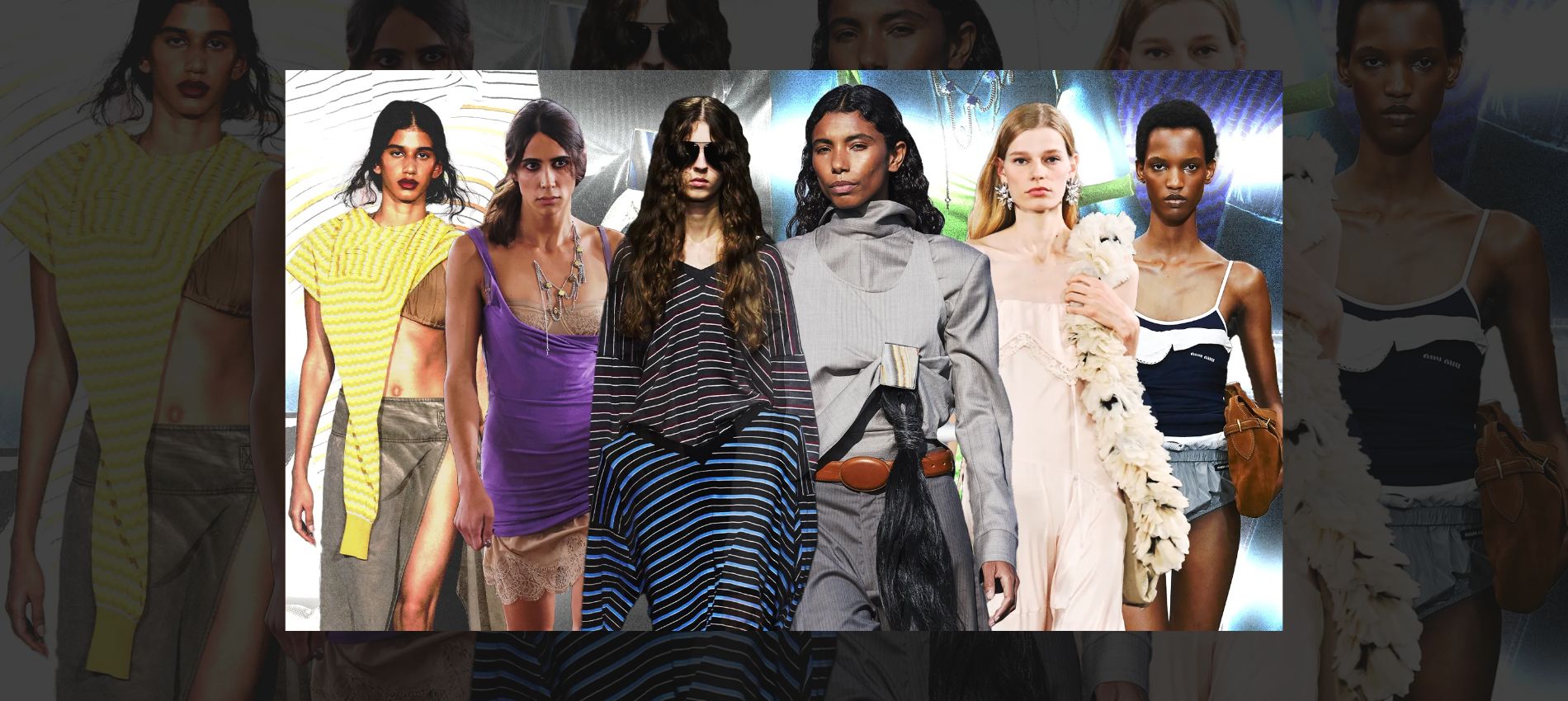
The Spring/Summer 2027 fashion season seems to be making a surprisingly strong case for imperfection. Across New York, London, and Milan Fashion Weeks, designers sent models down the runway wearing clothes that looked unfinished, misplaced, wrinkled, or simply… wrong.
Belts were left hanging open. Bras were worn over clothing. Dresses were pulled halfway up. Shirts were buttoned incorrectly. Some garments were even worn backward.
At first glance, these might look like styling mistakes. But according to the larger conversation surrounding fashion’s relationship with artificial intelligence, this deliberate messiness could actually represent something much more intentional: AI fatigue.
What Is AI Fatigue?
AI fatigue describes the growing exhaustion or frustration surrounding the increasing presence of artificial intelligence in everyday life and creative industries.
Generative AI has quickly entered fashion through everything from AI-generated campaigns and virtual models to technology-driven retail and even robots appearing on runways.
The appeal is obvious. AI can process huge amounts of information, generate images almost instantly, and produce results that appear incredibly polished.
But there is a catch.
Sometimes, that perfection can feel strangely lifeless.
AI can imitate what something should look like, but it does not experience wearing a shirt that is slightly uncomfortable, rushing out of the house with one button undone, or throwing on whatever happens to be nearby after a long night.
Humans do.
And fashion’s latest obsession with deliberate disorder might be a reaction to exactly that difference.
Welcome to “Analog Dressing”
The trend became particularly visible at New York Fashion Week.
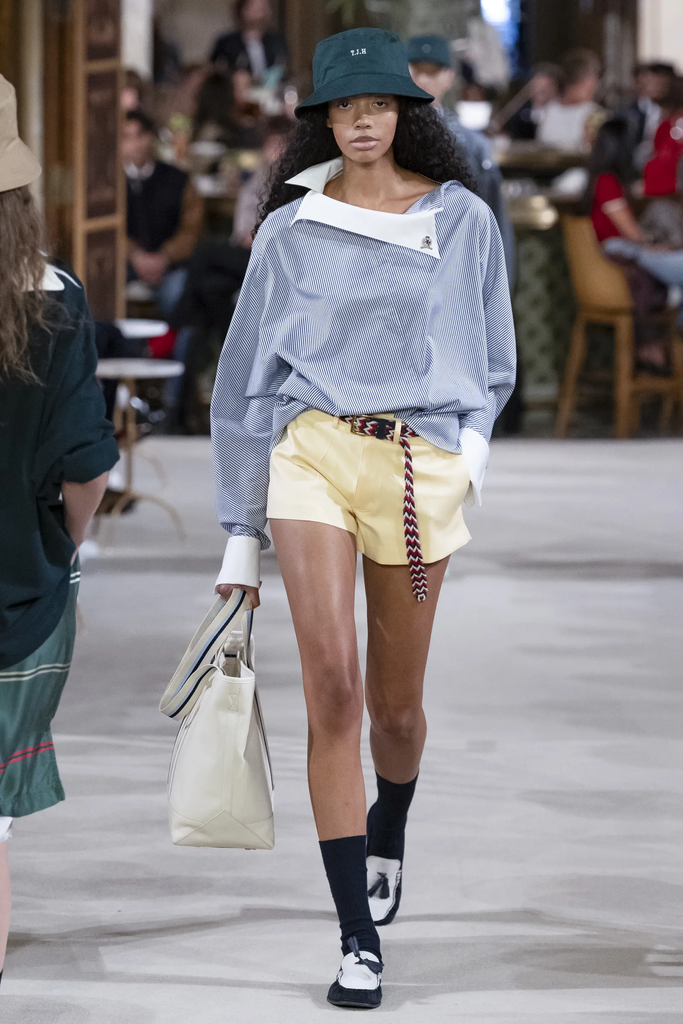
Altuzarra was among the designers to embrace intentionally imperfect styling, sending models onto the runway with misbuttoned shirts, open belts, and straps falling casually from shoulders.
The styling was described as “analog dressing”—a phrase that captures the idea of dressing in a way that feels spontaneous, physical, and distinctly human.
Instead of presenting clothing as an untouchable image of perfection, the runway suggested what happens when real people actually wear clothes.
A belt might not be fastened properly.
A shirt might not be tucked in perfectly.
A strap might fall off your shoulder.
And honestly? That’s probably how most of us dress when we’re not taking 45 minutes to photograph ourselves.
The Mess Spread Across Fashion Week
What started in New York didn’t stay there.
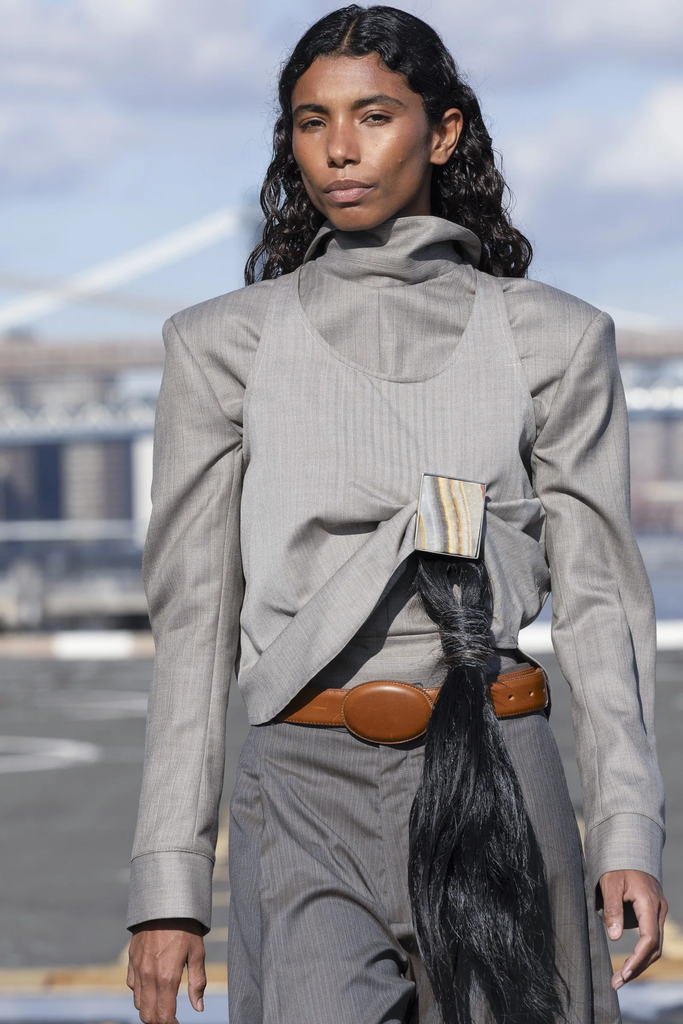
Other designers quickly embraced variations of the deliberately disheveled aesthetic.
Zoe Gustavia Anna Whalen played with bras left hanging from shoulders, while Campillo experimented with garments worn backward. LII leaned into uneven tanks and deliberately chaotic layering.
Even Tommy Hilfiger, a designer strongly associated with polished American preppy style, loosened things up by allowing traditionally crisp button-down collars to sit noticeably off-kilter.
The message seemed pretty clear: perfection was no longer the only definition of good styling.
Sometimes, looking slightly chaotic is the point.
London Took the Trend Further
The same attitude appeared during London Fashion Week.
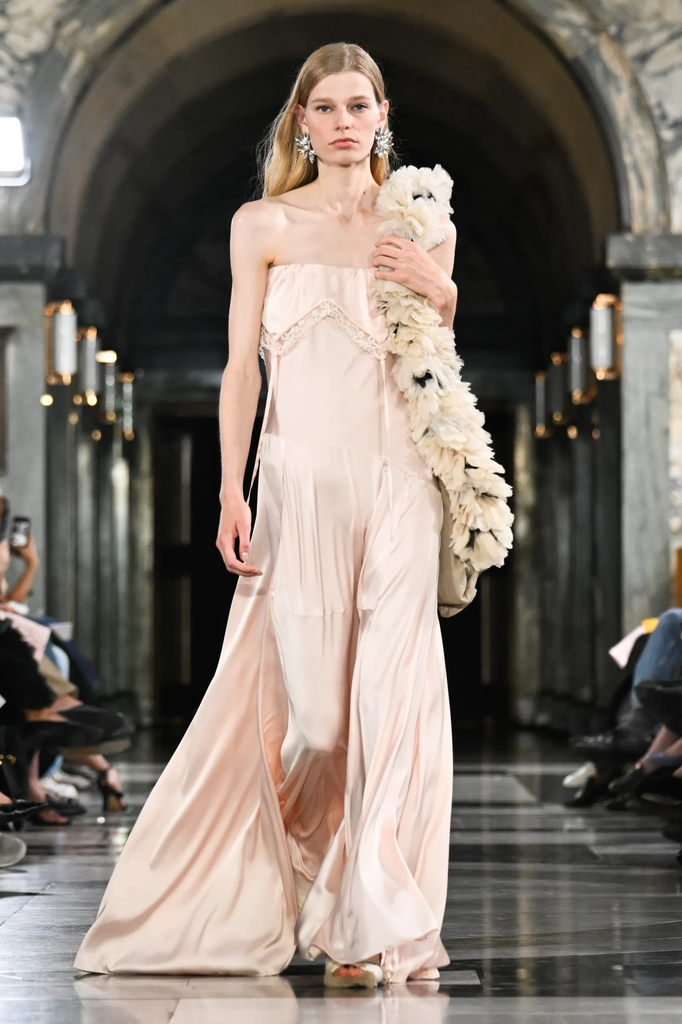
Simone Rocha allowed satin slip dresses to hang lower around the waist, creating silhouettes that looked almost accidentally undone.
KNWLS and designer Alexandre Arsenault pushed the concept even further, experimenting with unusual proportions and unconventional ways of wearing familiar pieces.
Tanks became something resembling pencil skirts. Underwear was positioned backward. Garments were styled in ways that might normally make someone ask, “Wait, are you sure that’s supposed to be like that?”
That’s precisely what made the styling interesting.
The clothes were not trying to pretend that everything was perfectly controlled.
Instead, the styling embraced the unexpected.
Prada Brings It to Milan
By the time the trend reached Milan, it had become impossible to ignore.
Prada incorporated deliberately disheveled details into its Spring/Summer 2027 presentation, including windblown-looking hair, unusual layering, and styling that felt deliberately imperfect.
The approach also connected back to Miu Miu’s Spring/Summer 2025 show, suggesting that this fascination with awkwardness has been developing for a while.
What changed in 2026 is the context.
In a world increasingly filled with AI-generated perfection, intentionally imperfect fashion suddenly feels rebellious.
Why Messiness Feels So Human
This is where AI fatigue becomes particularly interesting.
Artificial intelligence is often associated with precision. It can generate the same image repeatedly, correct imperfections, and optimize results according to patterns and data.
Human creativity doesn’t always work that way.
Sometimes the most interesting idea comes from a mistake.
A button is left undone because someone is late. A sweater is thrown on backward because someone is exhausted. A dress gets pulled up because the wearer wants to move differently.
These moments aren’t necessarily planned.
But designers and stylists can transform those everyday accidents into creative ideas.
And that is something AI can struggle to replicate—not because AI cannot recognize a messy outfit, but because it does not actually experience the human circumstances that create that mess.
Fashion Doesn’t Always Need to Make Sense
One of the most exciting things about this trend is that it gives fashion permission to be strange.
For years, fashion imagery has often been heavily edited and carefully controlled. Social media has only intensified the pressure to look perfect.
Every outfit can be adjusted.
Every photograph can be retouched.
Every awkward moment can be removed.
Fashion Week’s deliberately messy styling seems to push against that culture.
Instead of asking, “How can we make this look perfect?” designers are asking, “What if the imperfection is the interesting part?”
That shift makes the clothes feel more spontaneous and alive.
Is This Really a Reaction to AI?
It would be too simple to say that every designer suddenly decided to reject AI.
The trend has many influences, and fashion has always experimented with deconstruction, unconventional styling, and deliberately unfinished aesthetics.
Still, the timing is hard to ignore.
As AI becomes increasingly present in creative industries, the value of distinctly human experiences may become more obvious.
The imperfect, unpredictable, and slightly ridiculous can start to feel precious.
In other words, the things that technology might classify as mistakes can become exactly what humans find interesting.
The New Luxury Might Be Being Human
Perhaps that is the bigger message behind this season’s fashion.
When technology can create almost anything instantly, originality becomes more complicated. When digital images can be made flawless, flaws suddenly become meaningful.
A messy outfit can communicate spontaneity.
A crooked collar can suggest movement.
An undone belt can tell a story.
These details remind us that fashion isn’t just about producing a perfect image. It’s about people putting clothes on their bodies and living in them.
And that experience is inherently imperfect.
Final Thoughts
The rise of AI fatigue may be influencing fashion in an unexpected way: by making human imperfection feel cool again.
Across Spring/Summer 2027 runways in New York, London, and Milan, designers experimented with misbuttoned shirts, undone belts, awkward layering, exposed underwear, backward garments, and deliberately disheveled styling.
What might once have been considered a fashion mistake is now becoming a creative statement.
Maybe that’s because imperfection is one thing AI can imitate but never actually live through.
Fashion doesn’t always have to look perfect.
Sometimes, the most human thing you can wear is something that looks like you put it on in a hurry and decided not to fix it.
Follow D-Muse to stay current with fashion trends, lifestyle tips, and exciting events. DM us @dmusemagz now to get all the information you need!