

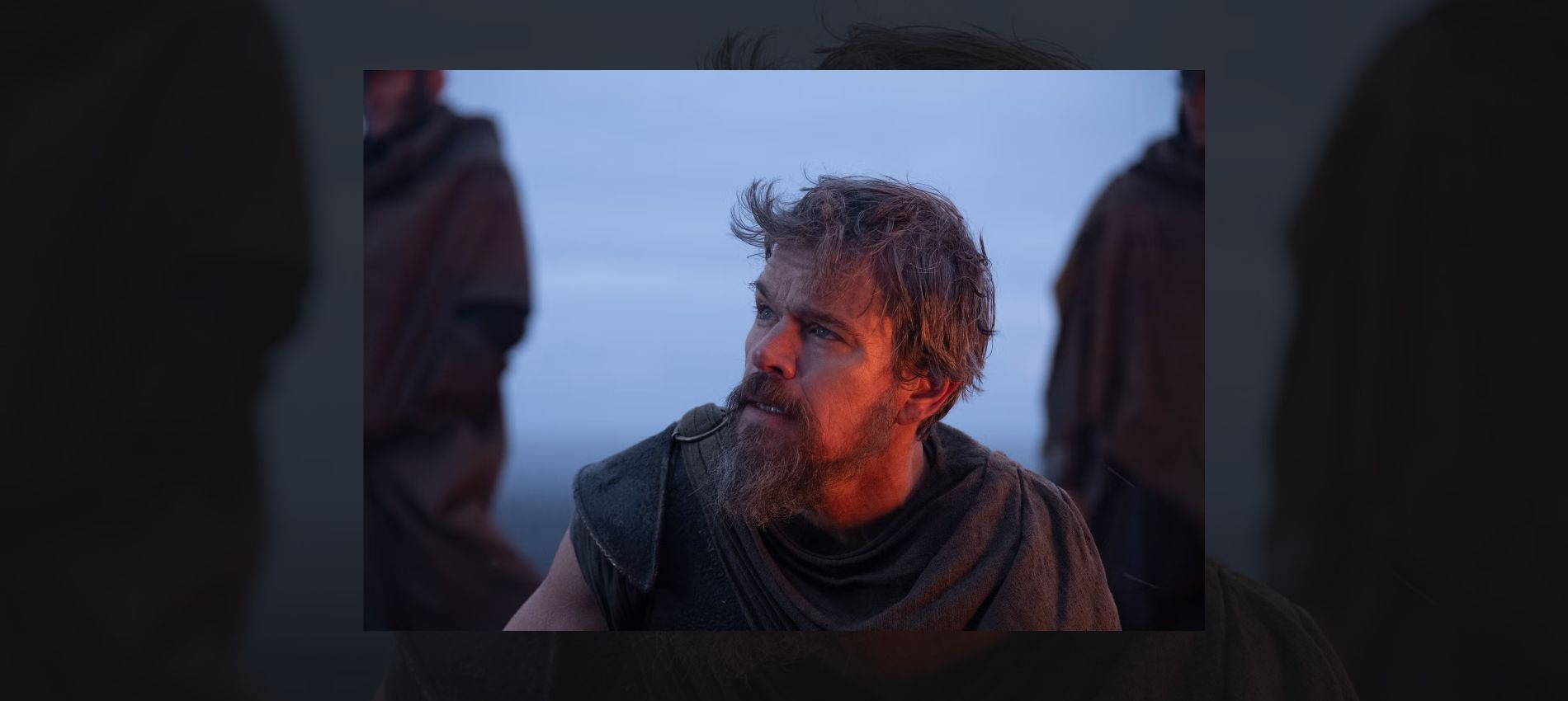
Why the Ending of Christopher Nolan’s The Odyssey Changed Everything (and What That Sunset Really Means)
July 21, 2026
Grab your popcorn, because we need to talk about Christopher Nolan’s latest cinematic spectacle, the odyssey. If you’ve spent any time on your social feeds this week, you know the internet is absolutely buzzing over that emotional bombshell of an ending.
We all expected a faithful, traditional retelling of Homer’s ancient Greek classic, but Nolan did what Nolan does best—he flipped the script entirely. Starring Matt Damon as Odysseus, Anne Hathaway as Penelope, and Tom Holland as Telemachus, the film gives us a deeply human take on guilt, trauma, and legacy.
If you just walked out of the theater wondering wait, why didn’t Odysseus take his crown back?, don’t worry. We’re breaking down the full emotional meaning behind the unexpected final scene of the odyssey and why that twist lands so hard.
(Consider this your official spoiler warning!)
A Major Plot Twist: How Nolan’s Version Diverges from Homer
For anyone who actually paid attention in high school English class, Homer’s epic ends on a pretty straightforward high note. Odysseus returns home to Ithaca, slays the greedy suitors vying for his queen, reclaims his kingdom, and lives out his days as a revered king alongside Penelope. Standard hero stuff, right?
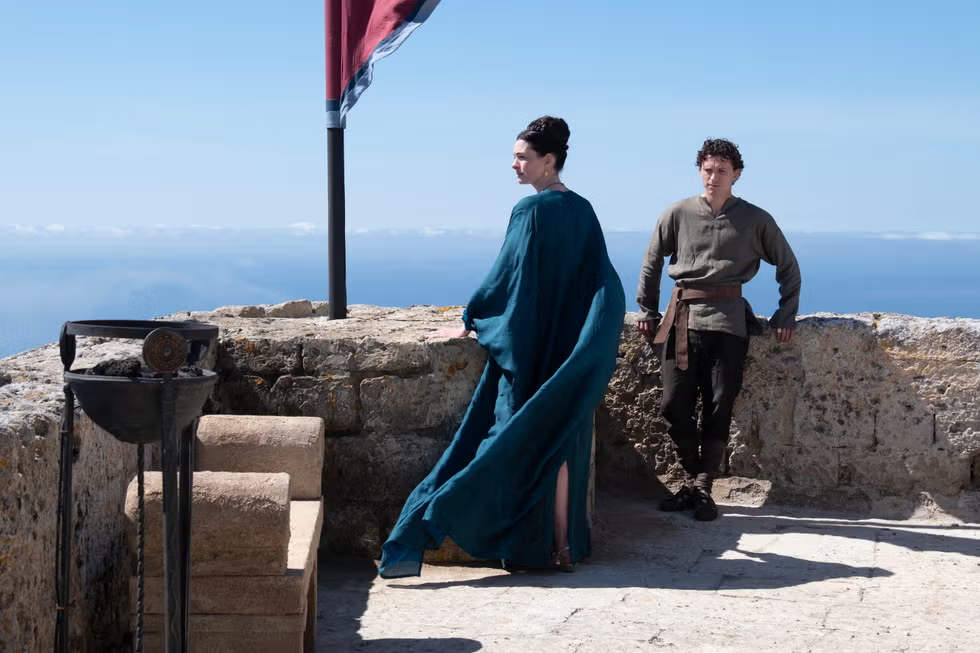
Well, in Christopher Nolan’s cinematic reimagining of the odyssey, the director trades a conventional triumphant return for something infinitely more complex and modern.
Instead of stepping back onto the throne, Odysseus and Penelope make a heartbreaking, joint decision to turn their backs on power. Together, they agree to self-exile, leaving Ithaca behind and entrusting the kingdom to their now-grown son, Telemachus (played with incredible heart by Tom Holland).
It’s a massive shocker for mythology purists, but it fundamentally shifts the odyssey from a simple story of heroic triumph into a deep, introspective look at accountability and mental peace.
The Weight of Guilt: Odysseus and the Ghost of Troy
Why wouldn’t a war hero want to rule his home after decades away? Because in this modern vision of the odyssey, Odysseus isn’t just fighting mythical obstacles and stormy seas—he’s battling his own shattered soul.
Throughout the film, we watch Odysseus piecing together his memories from the Trojan War. As the brilliant mastermind behind the Trojan Horse, he comes to realize the sheer scale of horror and destruction he unleashed. Nolan makes it clear that Odysseus isn’t unable to return home simply because of bad weather or angry gods; he is emotionally stranded, trapped in a psychological prison of his own making.
This internal torment reaches its peak during a haunting sequence in the land of the dead. Here, Odysseus confronts Sinon (played by Elliot Page), the soldier who volunteered for the dangerous mission of convincing the Trojans to bring the horse inside their gates.
Sinon delivers a brutal reality check, reminding Odysseus that while soldiers were sacrificing their lives for his grand strategy, Odysseus showed zero empathy or emotion for the men dying under his command. It’s a sobering moment that leaves Odysseus utterly consumed by remorse.
The Reunion: Beggars, Bows, and Emotional Truths
When Odysseus finally steps foot back on Ithaca’s shores, he disguises himself as a humble beggar to observe how his homeland has changed in his absence. This leads to some of the film’s most tender moments. Telemachus is able to recognize his father despite the years apart and the heavy toll war has taken on his spirit.
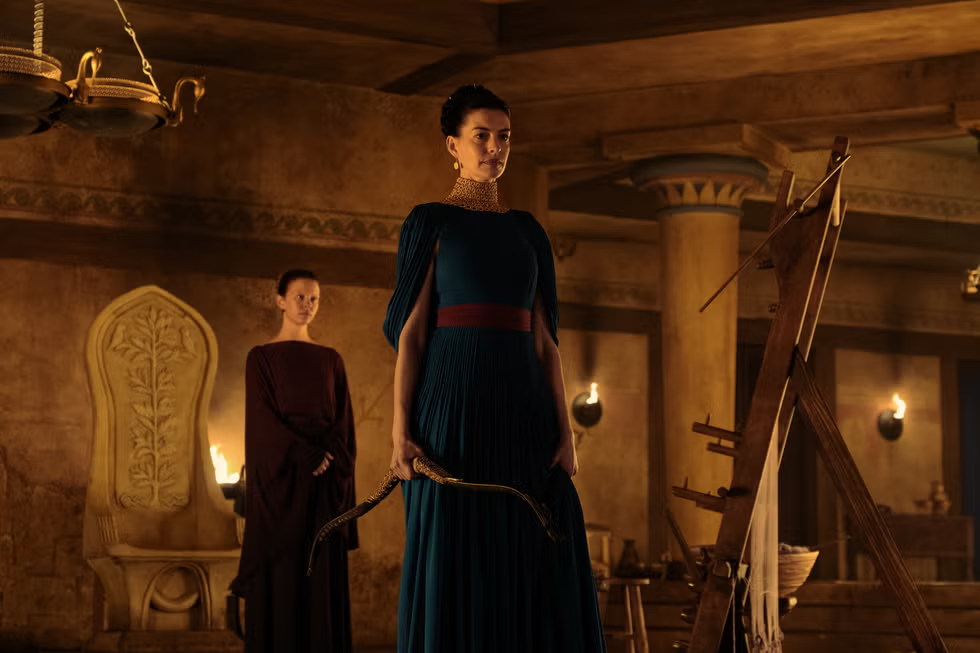
For Penelope, however, confirmation comes through a test of emotional and physical intimacy. She sets up the famous archery test for her persistent suitors—a challenge to string a legendary bow that only her long-lost husband knows how to handle.
When Odysseus effortlessly strings the bow, Penelope instantly recognizes the man she loved. Yet, instead of slipping effortlessly back into their old lives, the couple faces a quiet, profound truth: the war changed them forever, and they cannot simply pretend the past didn’t happen.
Chasing the Sun: Decoding the Final Scene & Quote
So, why choose exile over a royal palace? The answer lies in a beautiful motif woven throughout the odyssey: the setting sun.
Early in the film, before the fall of Troy, we see a younger Penelope holding baby Telemachus, pleading with Odysseus to avoid the war entirely. She begged him to sail away with her and “chase the sun.” Penelope understood a fundamental truth about humanity—that while war causes civilizations to collapse, humanity always rebuilds, much like the sun setting every night only to rise again the next morning.
When Penelope and Odysseus board that ship and sail off into the distance at the end of the odyssey, their departure carries two symbolic layers:
- Self-Imposed Penance: Odysseus knows he cannot rule as a righteous king while carrying the bloody legacy of Troy. Exile is his punishment and his path toward accountability.
- Fulfilling an Old Dream: By sailing away together, they are finally choosing to “chase the sun,” leaving behind political power to heal far away from the spotlight.
“A new dawn will break over the darkened world, when our mistakes will once again be forgotten.”
This haunting final line spoken by Odysseus caps off Nolan’s masterwork. It’s a bittersweet reflection on human nature. Yes, a new morning always brings a second chance to find goodness, but human history operates in cycles—where the tragic mistakes of the past are eventually forgotten, leaving future generations at risk of repeating them all over again.
The Takeaway
Christopher Nolan didn’t just adapt an ancient legend; he transformed the odyssey into an intimate, thought-provoking tale about trauma, love, and knowing when to pass the torch. Leaving Telemachus to build a better future while his parents sail off into the sunset gives us one of the most powerful, emotionally resonant film endings of the decade.
Follow D-Muse to stay current with fashion trends, lifestyle tips, and exciting events. DM us @dmusemagz now to get all the information you need!