

More Than a Rom-Com: Why ‘The Drama’ Is the Unsettling Mirror of Society We Can’t Stop Talking About
April 5, 2026
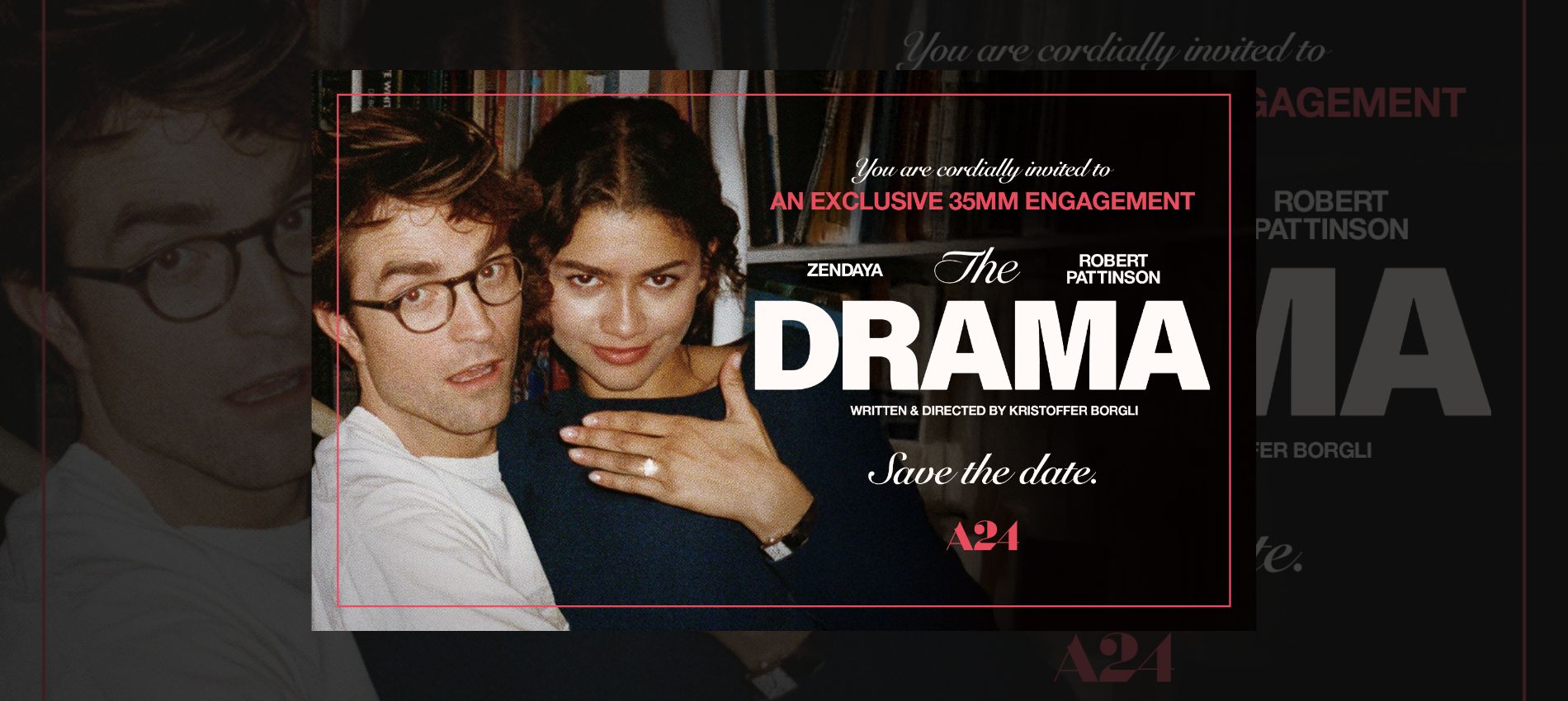
If you’ve been scrolling through your feed lately, you’ve probably seen the posters for one of 2026’s most anticipated releases. You know the ones: Zendaya looking radiant, Robert Pattinson looking broodingly handsome, and a chic New York apartment that looks like it was ripped straight out of an Architectural Digest spread. On the surface, the drama looks like the ultimate “comfort watch”—a sleek, high-fashion romantic thriller about a perfect couple approaching their dream wedding.
But let me tell you right now: put down the popcorn and prepare your brain, because the drama is not the movie you think it is.
At D-Muse Magz, we’re all about peeling back the layers of pop culture, and this A24 production is basically an onion of existential dread. I headed to the preview screening as a loyal fan of the lead duo (because let’s be real, Zendaya and R-Patz simply do not miss), but I walked out of the cinema feeling like I’d just survived a moral marathon.
1. The Marketing Bait-and-Switch
The genius of the drama lies in its deception. The trailers sold us a story of Charlie (Pattinson) and Emma (Zendaya), a “conventionally attractive” couple in total bliss. It felt like a spiritual successor to those moody, high-stakes romances we love. However, the film’s marketing, clever as it was, dropped subtle hints that something was rotting underneath the floorboards of that beautiful Manhattan flat.
Personally, I couldn’t even begin to imagine just how complex those layers actually were. This isn’t a “weekend light watch.” It’s an uncomfortable, anxious, and bleak mirror of society that is already dividing audiences into two camps: those who think it’s a masterpiece of empathy, and those who find it utterly disturbing.
2. Facing the Unthinkable: A Social Mirror
The “secret” that shakes Charlie and Emma’s relationship isn’t a cheating scandal or a hidden debt. The drama deals with an exceptionally complex and disturbing subject: the legacy of a school shooting.
I remember being in high school when these tragedies started appearing regularly in the media. It was hard to imagine then—and it’s hard to imagine now—how something so horrific could become a recurring headline. Over time, this subject has struck fear into the heart of every parent and educator. It’s a widespread social problem that transcends borders, and bringing it to the big screen requires a massive degree of caution.
Director Kristoffer Borgli (the brilliant Norwegian mind behind Sick of Myself and Dream Scenario) doesn’t go for the “action movie” approach. There are no vivid, aggressive scenes of violence. Instead, the weight of the drama is entirely mental. It provokes a deep anxiety by placing the viewer in a moral dilemma: how much of a person’s past are you willing to marry?
3. Morality in Shades of Gray
For almost the entire film, I found myself questioning who I am and where my own boundaries lie. Many psychologists point out that when you get married, you aren’t just joining lives with the person standing before you; you are entering a union with their entire history.
Charlie and Emma experience a total emotional collapse as they realize they might not truly know the person they are standing beside at the altar. We’ve seen this “hidden past” motif in other 2026 hits like Love Story and Something Very Bad Is Going to Happen, but the drama approaches it from the most jagged, human angle possible. It tests the limits of love and asks: is morality ever truly black and white?
4. A Sharp Critique of “Normalized” Crime
What makes the drama so sharp is its critique of a society where unimaginable crimes have been normalized—and at times, even glamorized—by the media. We live in a world where pointing a finger at an individual is easier than looking at the systemic problems of gun ownership and mental health.
The film suggests that empathy and understanding have been lost amid a flood of “artificial emotions” we’ve been taught to perform online. Charlie’s emotional breakdown throughout the film is profoundly human, showing the dark, bleak, and entirely “unaesthetic” sides of existence.
D-Muse Note: While there is no actual death depicted in the film, the psychological toll is heavy. This choice adds to the complexity; it’s about the aftermath and the burden of knowing.
5. Why You Should (or Shouldn’t) See It
As its title suggests, the film is highly dramatic. There are major twists that drew audible gasps from my packed theater. And yet, there were moments I laughed—not because it was a comedy, but because life is weirdly full of laughter even in the midst of pain.
You should see the drama if:
- You want a film that pushes you toward a deeper analysis of your own values.
- You appreciate A24’s signature “elevated” psychological tension.
- You want to see Zendaya and Robert Pattinson give career-defining performances.
You should skip the drama if:
- You are currently looking for an escape or a lighthearted rom-com.
- You are particularly sensitive to themes involving school violence and its trauma.
The D-Muse Final Verdict
Art is supposed to make us feel things, even the uncomfortable things. The drama is an accessible, tense, and aesthetically compelling piece of work that serves as a mirror of our reality. It might hurt, and it might offend, but it’s a conversation we need to have.
If you’re looking for a movie that stays with you long after the credits roll—one that makes you look at your partner and wonder what secrets are tucked away in their history—this is it. Just don’t say we didn’t warn you about the emotional hangover.
Have you seen the drama yet? Did you find yourself empathizing with Charlie, or were you on Emma’s side of the moral line? Let us know in the comments—we have a feeling this is going to be the most debated film of the year!
Follow D-Muse to stay current with fashion trends, lifestyle tips, and exciting events. DM us @dmusemagz now to get all the information you need!