

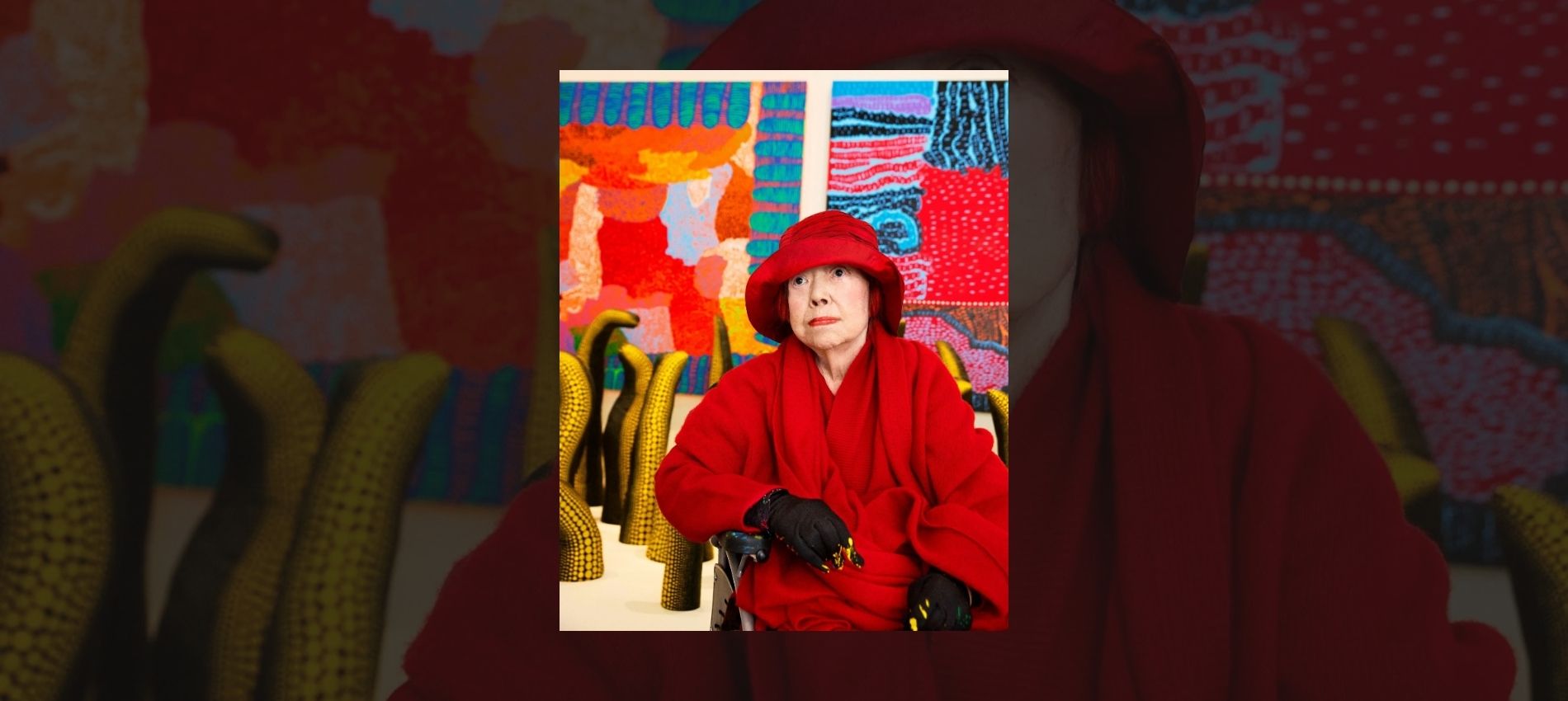
Polka Dots into Infinity: 5 Essential Things to Know About Legendary Japanese Artist Yayoi Kusama
September 1, 2026
The world of contemporary art has lost its brightest, most eccentric star. Legendary avant-garde pioneer Yayoi Kusama—affectionately celebrated across the globe as the “Princess of Polka Dots”—passed away on August 14, 2026, at the age of 97.
Announcing her passing, the Yayoi Kusama Museum shared a touching tribute: “She continued to paint until her final days, never setting aside her brush, and remained steadfast in her lifelong belief that love can save the world.”
From hypnotizing Infinity Mirror Rooms and towering yellow polka-dot pumpkins to ground-breaking performance art, Yayoi Kusama redefined what it means to turn personal struggle into global inspiration. At D-Muse Magz, we are celebrating her extraordinary life, her radical anti-war activism, and the timeless legacy she leaves behind.
1. Art Was Her Lifeline Against Wartime Trauma and Family Opposition
Born on March 22, 1929, in Matsumoto, Japan, Yayoi Kusama grew up amidst the harsh realities of World War II. From a very young age, she turned to drawing and painting as a form of self-soothing therapy to cope with traumatic childhood experiences.
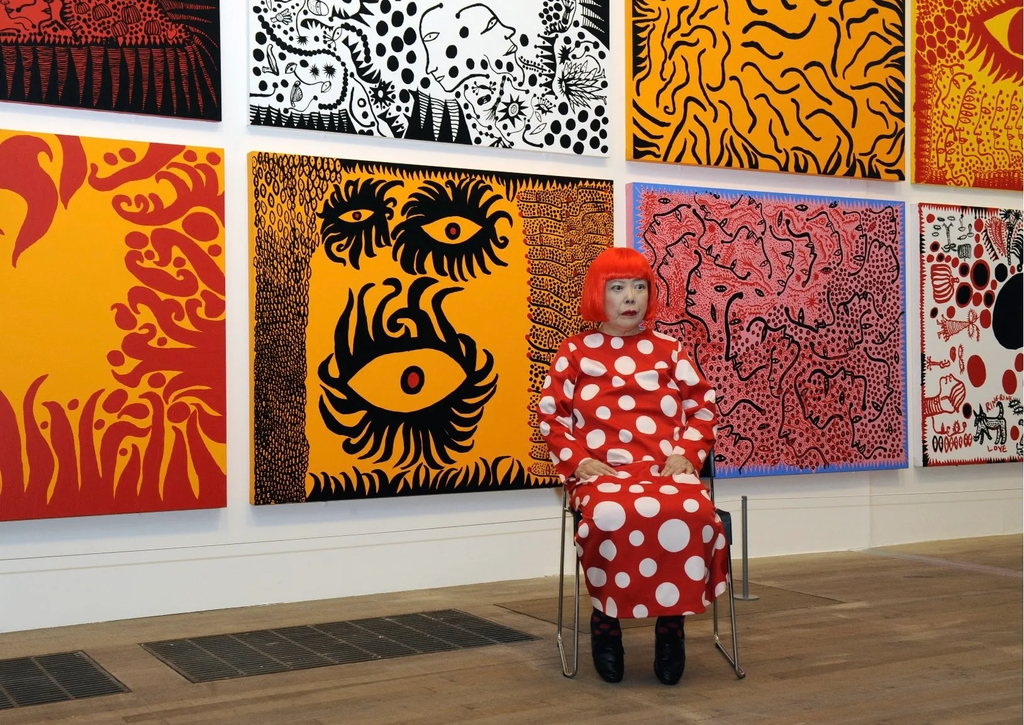
Her artistic obsession was far from supported at home. Her socially conservative family disapproved of her creative ambitions, going so far as to tear paper out of her hands. When she later entered the art world, she faced a dual hurdle: the mid-century art landscape was overwhelmingly male-dominated and heavily biased toward Western artists. Undeterred, Yayoi Kusama fought tirelessly to prove her worth, relocating to New York City in the late 1950s and carving out a space that belonged entirely to her.
[Wartime Matsumoto] ───> [New York Avant-Garde Era] ───> [1966 Venice Biennale] ───> [Global Infinity Rooms]
2. Her Signature Polka Dots Were Born from Childhood Hallucinations
You cannot separate Yayoi Kusama from her signature polka dots, but her obsession with repetitive patterns wasn’t just a fun aesthetic gimmick—it was a literal representation of how she experienced reality.
The motif originated during a severe psychiatric episode in her childhood. While sitting at a dining table staring at a red floral tablecloth, she looked up and realized the pattern was multiplying across the room:
“I began to see the same pattern covering the ceiling, the walls, the entire room, and eventually, the universe and my own being… I felt as if I had begun to self-obliterate, to revolve in the infinity of endless time and the absoluteness of space.”
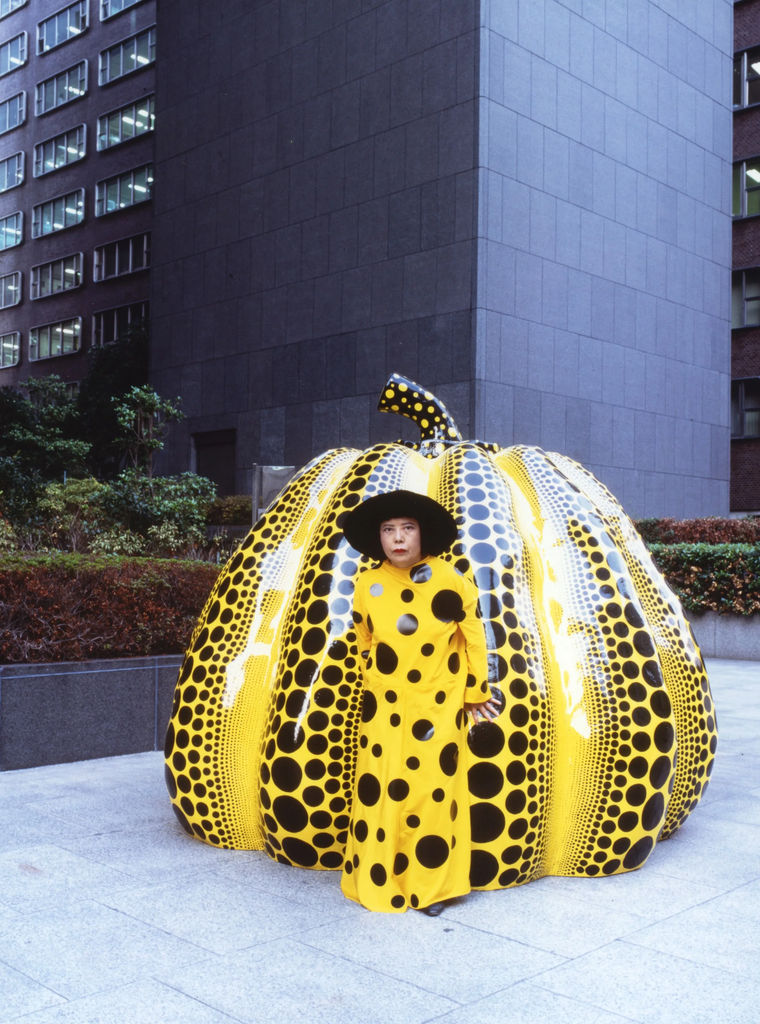
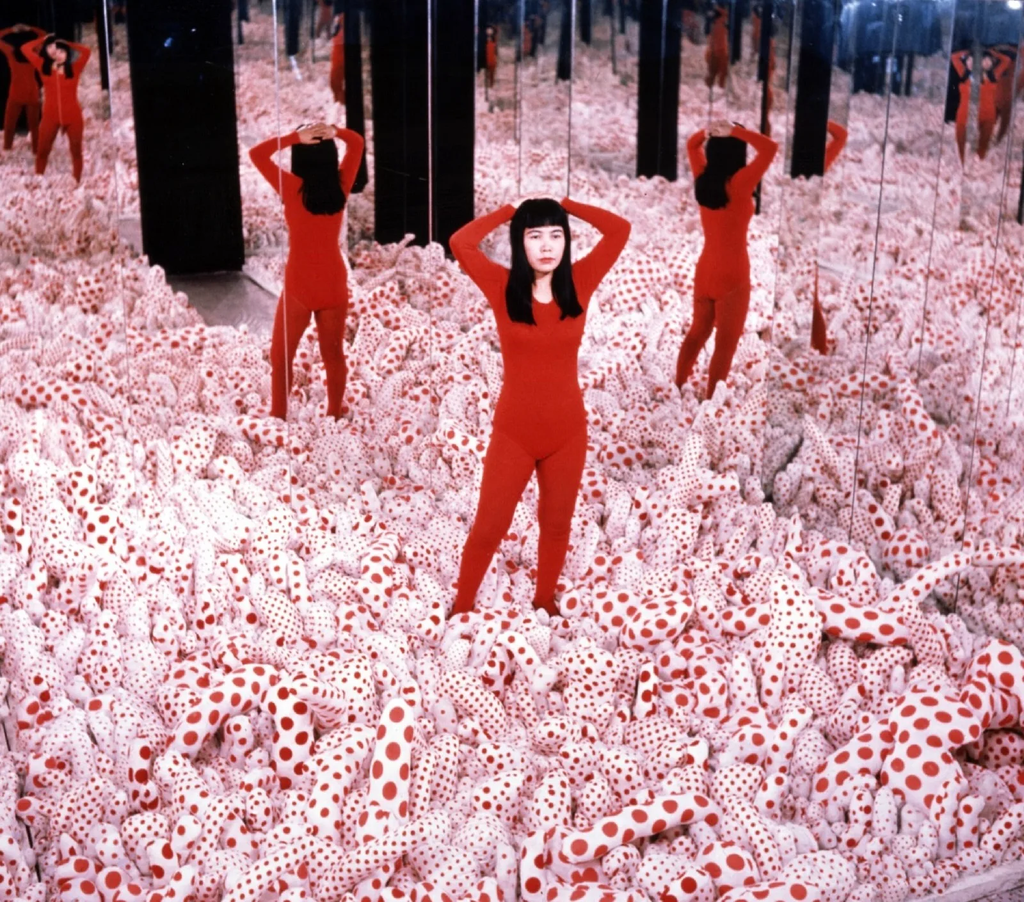
That concept of “self-obliteration”—losing one’s ego inside an endless field of dots—became the central philosophy of her career. She translated those visions into paintings, sculptures, high-fashion collaborations, and her famous Infinity Mirror Rooms.
3. She Was a Fearless Anti-War Activist and LGBTQIA+ Defender
While Yayoi Kusama is widely recognized for her visual installations, she was also a radical activist who used her platform to challenge political and social norms, particularly during the 1960s in New York City.
| Area of Advocacy | Key Actions & Historical Impact |
| Anti-War Movement | Staged naked “happenings” and protests across NYC against the Vietnam War and capitalist greed. |
| Mental Health Awareness | Openly discussed her psychiatric struggles, destigmatizing mental health decades before it became mainstream. |
| Sexual Liberation & Queer Rights | Championed LGBTQIA+ freedom and body positivity through performance art and radical street theater. |
| Artistic Representation | Broke barriers as an East Asian woman in Western art, opening doors for future BIPOC creators. |
4. She Voluntarily Lived in a Psychiatric Hospital for Nearly 50 Years
After returning to Japan in 1973 following her high-intensity years in New York, Yayoi Kusama experienced severe mental health crises. Demonstrating incredible self-awareness and prioritizing her well-being, she voluntarily checked herself into Seiwa Hospital in Shinjuku, Tokyo, in 1977.
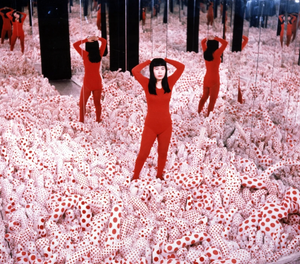
She made the hospital her permanent residence for the remaining five decades of her life. Her personal art studio was situated just a short walk away, allowing her to maintain a disciplined daily routine: painting all day at her studio and returning to the hospital each night to rest. This structured environment provided the mental stability she needed to produce some of the most prolific work of her career.
5. She Became the Most Commercially Successful Living Female Artist in History
In 1966, Yayoi Kusama made history as the first woman to represent Japan at the prestigious Venice Biennale, setting the stage for decades of international acclaim.
By the 21st century, her popularity had reached rock-star levels. Fans routinely waited in line for six hours just to spend 45 seconds inside one of her Infinity Mirror Rooms. That unprecedented public devotion translated into record-breaking commercial success:
- Sotheby’s Auction Record:Yayoi Kusama held the record for the highest auction prices of any living female artist in the world.
- Artistic Royalty: The only woman artist—living or dead—to out-sell her at auction was her early career mentor and close friend, Georgia O’Keeffe.
The Immortal Legacy of a Modern Visionary
Yayoi Kusama proved that art isn’t just decoration—it is a sanctuary, a form of healing, and a universal bridge that connects human souls across time and space. Though she has departed her earthly life at 97, her yellow pumpkins, infinite mirrors, and polka-dot universes will continue to inspire generations to look up at the stars and find love in the absolute infinity of space.
Follow D-Muse to stay current with fashion trends, lifestyle tips, and exciting events. DM us @dmusemagz now to get all the information you need!